
Reviewed · MONTENEGRO WALKING TOURS
Private Kotor Old Town Walking Tour
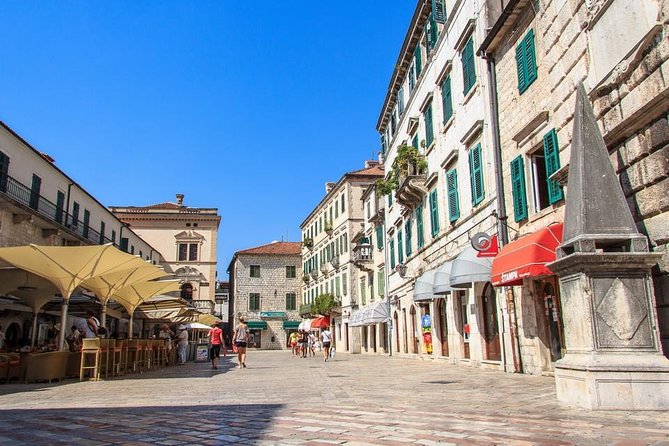
Kotor’s Old Town is compact, but its stone lanes pack in Venetian palaces, churches, trading squares, and stories from Montenegro’s past. This one-hour walking tour gives you a useful first look without turning your day into a long lecture or a hard march.
I like the small group limit of 10 and the chance to hear local stories from guides such as Ivana, Vuk, Sophia, or Alex. I also like the route itself: it links the Clock Tower, Pima Palace, St. Tryphon Cathedral, Karampana Fountain, and the Orthodox churches in a tidy circuit.
The catch is simple: $66.38 per person is a stiff price for about an hour, especially since cathedral and museum entry fees are extra. This works best as a quick orientation, not as a full study of Kotor.
Key points to know before you book
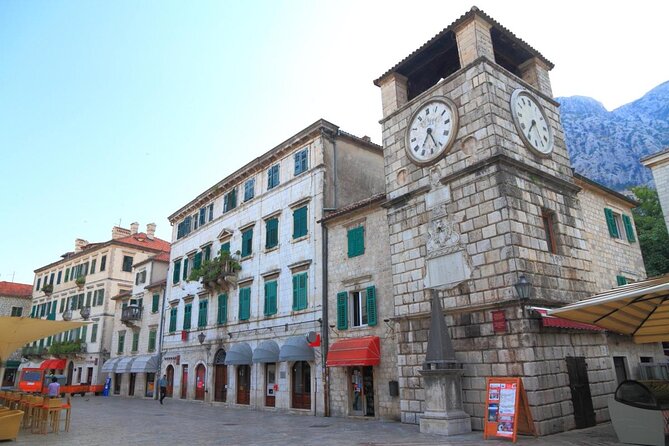
- A compact route through Kotor’s main squares: You see the Old Town’s central sights without wasting time finding them yourself.
- Small groups make questions easier: The maximum is 10 people, a useful advantage in narrow lanes and busy squares.
- Guide quality can shape the experience: Past guides including Ivana, Vuk, Sophia, Milosz, Boyanna, and Alex have been praised for humor, local insight, and clear English.
- The tour stays outside paid sights: Cathedral and museum admission are not included, so plan to return on your own if you want a closer look inside.
- A good pace for mixed-age groups: The walk has suited young children and older family members, but the experience is still a walking tour over old stone streets.
- You finish where you started: The guide returns you to the main square by the gate, leaving the rest of your day flexible.
Starting at Kotor’s main gate
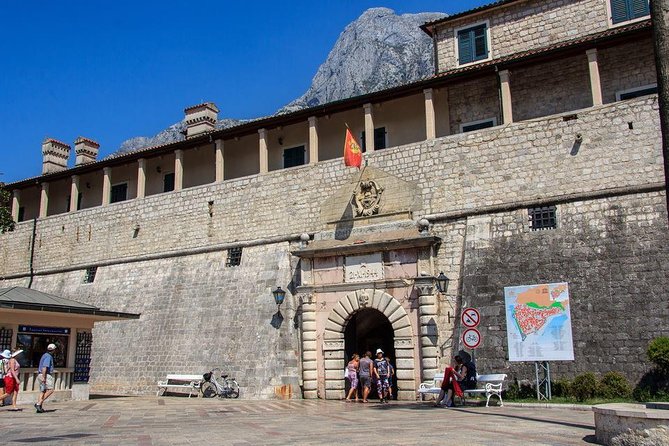
Meet at the Tourism Organisation of Kotor information point on Trg od Oružja, the Square of Arms, just outside or by the Old Town’s main gate. The location is central, but the meeting area can be crowded, particularly when cruise passengers arrive.
Look for the guide and confirm the tour name before setting off. One useful practical detail is that guide signage may simply say 1 Hour Walking Tour rather than displaying a large company name. If you are arriving with a shipload of people, allow extra time to spot the right person.
The tour begins with an introduction to Kotor and Montenegro. This opening matters because Kotor’s buildings make more sense once you understand the town as a fortified Adriatic settlement shaped by different powers and traditions. A good guide can give you the basic framework before the walk becomes a string of handsome facades.
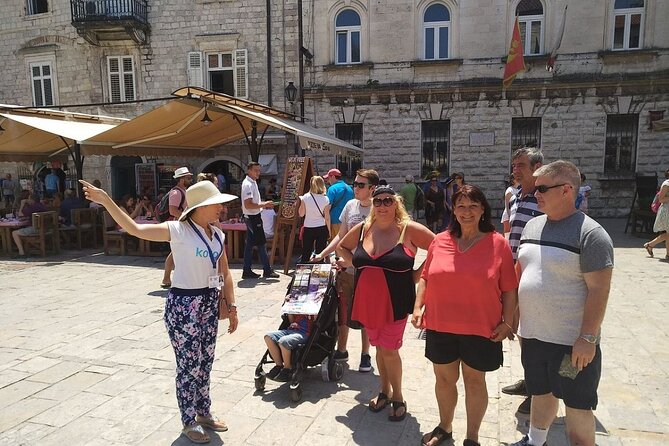
The group is capped at 10 people. That is small enough for you to hear commentary and ask questions without shouting across a crowd. It also gives the guide some room to adjust the emphasis. Past departures have included flexible guides who answered questions, paused for photographs, and changed the focus to suit the group.
More guided walks around Kotor
- Kotor Fast-Track: Perast Old Town & Our Lady of the Rocks
★ 5.0 · 411 reviews - Kotor Old Town Walking Tour
★ 5.0 · 357 reviews - Private Walking tour with Wine and Food
★ 5.0 · 197 reviews
The Square of Arms and the Clock Tower
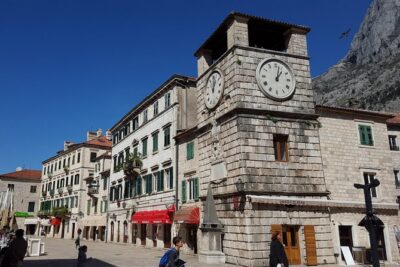
Your first proper stop is Armory Square, also called the Square of Arms. Its clock tower is one of the Old Town’s easiest landmarks to recognize and a natural place to begin understanding Kotor’s civic center.
The square sets the tone for the walk. You are not simply moving from monument to monument. The guide uses the buildings around you to explain how public spaces worked, where people met, and how the town’s military and civic life fit together.
This is also where a guide’s personality can make a real difference. Vuk has been described as funny and engaging, while Ivana has been praised for personal stories and a patient manner. Those details are useful because a one-hour tour depends heavily on how well the guide turns a short route into a coherent story.
Do not expect a long stop at every building. The tour is designed as a highlights walk, so the Clock Tower receives context and explanation, but it is not a detailed architectural seminar.
Flour Square and Kotor’s trading past
The route continues to Flour Square, an old trading area framed by the Buca and Pima palaces. This is one of the most rewarding parts of the walk if you want more than a list of church names.
The square helps you picture Kotor as a working town. Palaces here are not just pretty stone fronts. They point to wealth, trade, family influence, and the social order that shaped the Old Town.
The tour can give you a sense of how Kotor developed across different periods, including medieval, Venetian, and Baroque influences. One guide with graduate-level history training was especially strong on the churches, palaces, and plazas. If commerce interests you, ask directly about trade and daily life. That subject may receive less attention than the major monuments unless you bring it up.
This is a recurring theme with short city tours: the route provides the structure, but your questions help decide how much of the story you hear. Ask about the palaces, and you may get more than the standard summary. Stay quiet, and the guide will likely keep moving toward the next landmark.
St. Tryphon Cathedral Square
St. Tryphon Cathedral is the tour’s biggest religious landmark. The square gives you a good view of the cathedral’s exterior and places it within the wider pattern of Kotor’s public spaces.
The guide explains the cathedral’s place in local religious and cultural life, along with the outside influences that helped shape Kotor. This is a useful stop for understanding that Montenegro’s identity is not one simple story. Catholic and Orthodox traditions sit close together in the Old Town, and the buildings reflect that layered past.
The cathedral is viewed from the route, but admission is not included. You can pay separately if you want to enter, though the tour itself does not promise an interior visit. That arrangement keeps the walk moving, but it also means you should budget extra if religious art or architecture is a priority.
The square is a natural photograph stop. Guides have made time for pictures during the walk, though the exact pace depends on the group and the guide. If you are using the tour as a quick introduction before exploring alone, note the location so you can return later with more time.
More private days around Kotor
- Montenegro Private Tour: Kotor, Perast,Our Lady Of The Rock,Budva
★ 5.0 · 181 reviews - VIP Private Charter: Blue Cave & Lady of the Rocks (Flexible)
★ 5.0 · 172 reviews - Blue Cave & Lady of the Rocks 3 hrs private tour (up to 5 pax)
★ 5.0 · 142 reviews - 2025 Private Boat To Blue Cave 3 hours ADVENTURE
★ 5.0 · 130 reviews
The Maritime Museum and Karampana Fountain
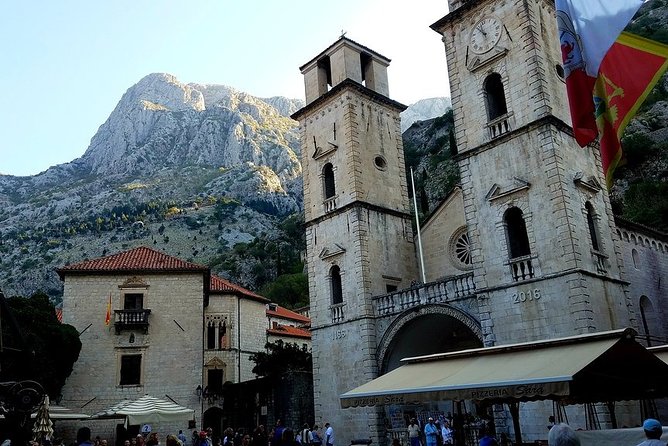
Next comes the Maritime Museum square and the Karampana Fountain. This stop adds a different angle to the tour by connecting Kotor with the sea and with the practical systems of an old walled town.
The fountain is a small feature, but it is exactly the sort of detail you might walk past without a guide. It gives the route a human scale. Kotor is full of famous churches and palaces, yet everyday objects often explain how the town functioned better than grand facades do.
The Maritime Museum itself is not included in the tour. If you want to visit, plan to do so separately. The guide can point out its place in the Old Town and explain why maritime life mattered, but this experience remains an outdoor walking tour.
I like this portion because it breaks up the larger architectural stops. You get a chance to hear about practical life, local customs, and the connection between the town and the Adriatic. The amount of detail will depend on the guide, so ask if you want more on seafaring, trade, or daily work.
St. Luke and St. Nicholas churches
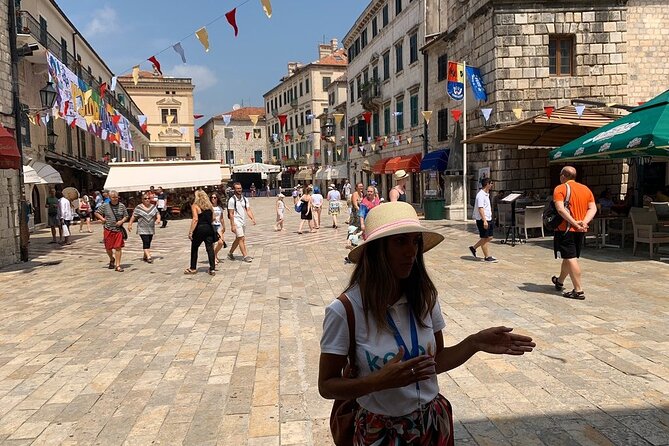
The route finishes at the squares of St. Luke and St. Nicholas, where the Orthodox churches provide an important contrast with St. Tryphon Cathedral.
Seeing these churches within one short walk helps explain Kotor’s religious variety. The point is not simply to collect photographs of different buildings. It is to notice how several traditions share the same small Old Town and how that mixture became part of Montenegrin cultural life.
Guides have also used this section to discuss local customs, heritage, and the identity of Montenegro. Sophia, for example, has been praised for her pride in her country and for making the city’s plazas meaningful to children and older relatives alike.
The churches are encountered from the outside as part of the route. As with the cathedral and museum, entry fees are not included. If interiors matter to you, treat this walk as an introduction and leave time afterward for independent visits.
What guides can add to the hour
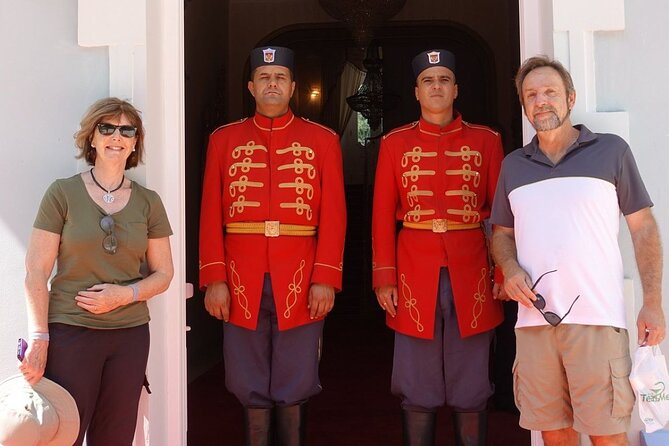
This tour’s strongest feature is not any single building. It is the guide. The route is straightforward enough to follow alone, but a good explanation connects the pieces.
Past guides have included Ivana, Vuk, Milosz, Boyanna, Sophia, and Alex. Their reported strengths vary slightly. Ivana has been praised for warmth, patience with children, and personal stories from Kotor. Vuk has been singled out for humor and for adapting the talk to the group’s interests. Sophia has been described as enthusiastic and proud of Montenegro. Alex brought strong historical training and clear explanations of the churches and plazas. Milosz also offered useful food advice, including a recommendation for Pizza Pronto.
Guide assignments can change, so book this with the understanding that the person leading your tour may not be one of those names. The important point is that the experience can range from a lively local overview to a more formal history lesson.
One weak departure received criticism for offering too little historical content and too much personal biography. That is a fair warning. If you want dates, political context, or trade details, ask for them early. A direct question can steer the hour toward what you actually care about.
Is one hour enough for Kotor?
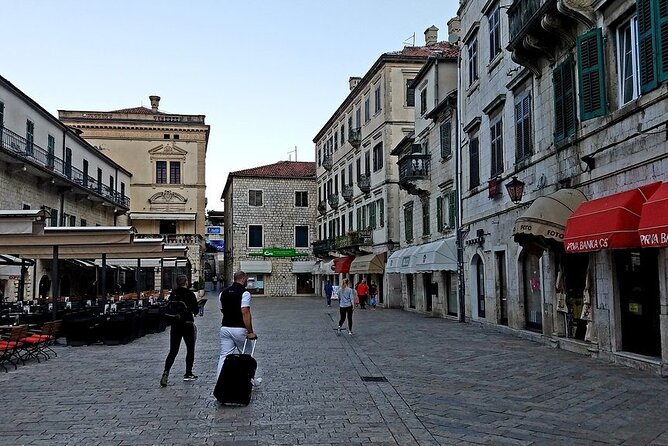
One hour is enough to get your bearings. You can see the key squares, identify the main churches, learn the basic story of the Old Town, and return to the gate with the rest of your day free.
It is not enough for a slow, detailed examination of every building. You will not have much time for the museum, extended cathedral visits, or a broad discussion of Montenegrin history. This is a highlights tour, and the pace reflects that.
The duration may suit you if Kotor is one stop on a larger itinerary or if you are visiting from a cruise ship. It can also be a smart first activity in town. Afterward, you can use the map and the guide’s recommendations to explore at your own speed.
Families may find the length especially useful. The walk has worked for groups with young children and older parents, and one guide was praised for staying patient when children became tired. Still, Kotor’s old streets are paved with stone, so comfortable shoes are sensible and anyone with mobility concerns should judge their own comfort.
What the $66.38 price really buys
At $66.38 per person, this is not a bargain if you judge it only by minutes. You are paying roughly for a one-hour guided walk, with no food, drinks, transport, or attraction admission included.
The value comes from the small group and the guide’s interpretation. Ten people or fewer is far more manageable than a large group, especially in Kotor’s narrow streets. You can hear the explanation, ask follow-up questions, and get practical suggestions for the rest of your visit.
Still, the price is high enough that you should compare it with your own plans. If you already intend to read about Kotor, follow a map, and visit the main squares independently, the tour may feel expensive. If you have limited time and want a clear introduction without research, the cost is easier to justify.
Group discounts are available, but the exact savings depend on the booking. Children receive a child rate only when sharing with two paying adults. Cathedral and museum admission remain separate costs.
Timing, meeting details, and cancellation
Confirmation is sent at booking, and the activity is offered in English with an English-speaking guide. The tour begins and ends at the main meeting point, so you do not need to arrange transport between the start and finish.
Service animals are allowed, and most people can take part. The experience is not presented as a specialist accessible tour, however, so remember that the route uses historic streets and squares.
Free cancellation is available if you cancel at least 24 hours before the local start time. Cancellations or changes made inside that window are not refunded or accepted. That rule matters if your port schedule or daily plans may shift.
Who should book this Kotor walk?
I would choose this tour if you want a fast, organized introduction to Kotor and prefer hearing the city explained rather than simply photographing it. It is particularly useful for first-time visitors, cruise passengers, families, and anyone with only a short block of free time.
You are also a good match if you enjoy asking questions. The route can cover the standard landmarks, but the best use of the hour is to ask about Montenegrin customs, religion, trade, local life, or the buildings that catch your eye.
I would hesitate if your main goal is a long architectural or historical study. The price is high for the duration, paid entries are separate, and the quality of the hour depends heavily on the guide assigned.
Should you book the Private Kotor Old Town Walking Tour?
Book it if you value a small group, a local English-speaking guide, and a well-planned circuit through Kotor’s central sights. The route covers the Clock Tower, Buca and Pima palaces, St. Tryphon Cathedral, Karampana Fountain, and the Orthodox churches without taking over your day.
Skip it if you are comfortable exploring independently or if you want interiors, museum time, or a much longer lesson. At this price, the tour makes the most sense as a short orientation with personal guidance, not as the final word on Kotor.
FAQ
Where does the Kotor walking tour start?
It starts at the Main Info Point of the Tourism Organisation of Kotor, at CQF9+WVJ, Trg od Oružja, by the Old Town’s main gate.
Where does the tour end?
The activity ends back at the meeting point, in the main square just inside the gate.
How long does the tour last?
The walking tour lasts approximately one hour.
Is the tour offered in English?
Yes. It is operated by an English-speaking guide and offered in English.
Are cathedral and museum entrance fees included?
No. Food, drinks, and entrance fees to the cathedral and museum are not included.
What is the cancellation policy?
You can cancel at least 24 hours before the local start time for a full refund. Cancellations or changes made less than 24 hours before the start are not accepted for a refund.
Newest reviews from Kotor
- From Cavtat Full Day Tour Montenegro Perast and Kotor★ 3.9 · 13 reviews
- Cable car + Electric MTB from Njegos Mausoleum to Kotor bay★ 5.0 · 11 reviews
- Kotor Shore Excursion : Coastal Pearls of Montenegro Tour★ 5.0 · 22 reviews
- From Tivat/Kotor: Whole Boka Bay Guided Cruise, Comfortable Ship★ 4.5 · 23 reviews
- National Park Lovcen and Lipa Cave (Private tour)★ 5.0 · 17 reviews
- Blue Cave & Our Lady of the Rocks 3 hr private tour(up to 12 pax)★ 5.0 · 17 reviews
- 1-Day Montenegro Hiking Tour to Durmitor National Park★ 5.0 · 17 reviews
- Montenegro coast- Tivat, Kotor and Budva (suggested for cruise ship travelers)★ 5.0 · 18 reviews
Montenegro Walking Tours, compared.

Kotor Fast-Track: Perast Old Town & Our Lady of the Rocks
Read our review →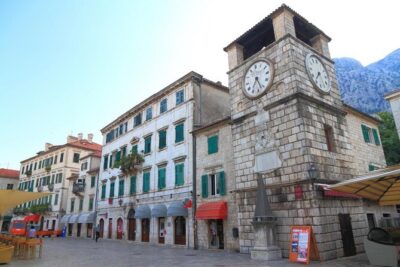
Private Kotor Walking Tour – Rick Steves Recommended
Read our review →
Kotor private cooking class with lunch and Old town guided tour
Read our review →
Lady of the Rocks & Perast Old Town Private Tour (up to 5 people)
Read our review →
Food, wine and the best private walking tour of Kotor
Read our review →Browse the lists this tour appears in