
Reviewed · MONTENEGRO WALKING TOURS
Kotor Old Town Walking Tour
Kotor’s Old Town packs centuries of power struggles, faith, trade, and daily life into a tight maze of stone lanes. This one-hour walking tour gives you a useful first look, beginning at the Sea Gate and ending near the Square of Arms.
I like two things right away: the route covers the main sights without wasting time, and guides such as Jelena, Ana Marija, and Petra bring warmth, humor, and clear English to the history. The main consideration is its brisk pace. One hour is enough for an introduction, not a full study of Kotor, and church, museum, and city-wall admission fees are extra.
Key points at a glance
- A compact route through the walled city: See the Sea Gate, Square of Arms, Clock Tower, palaces, churches, wells, and Northern Gate.
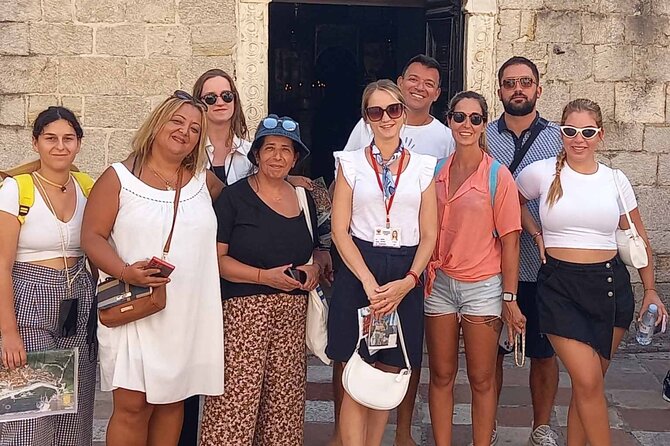
- Strong local guiding: Guides including Jelena, Ana Marija, Petra, and others explain history, culture, religion, and modern Montenegro in accessible English.
- St. Tryphon Cathedral is the centerpiece: You receive a short guided visit, but admission is not included.
- Good for cruise-day sightseeing: The tour starts and ends by the main gate, making it easy to continue exploring or return to the ship.
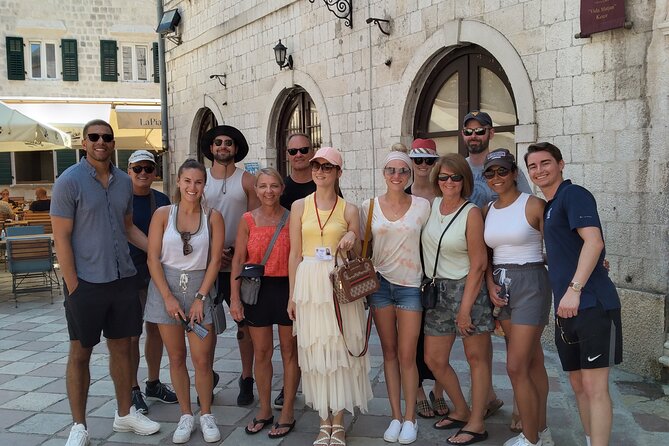
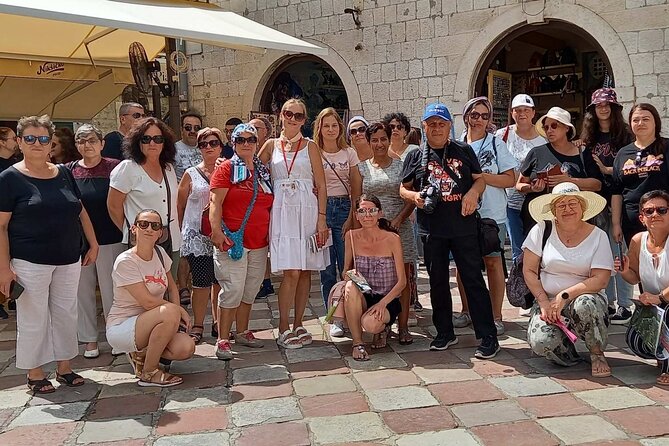
- Small groups are possible: The maximum is 30 people, though some departures may be much smaller.
- Easy walking, rough underfoot: Cobblestones make comfortable shoes a sensible choice.
Why Kotor Old Town works so well in one hour
Kotor sits at the far end of Boka Kotorska, the Bay of Kotor, where steep mountains press close around the water. Its stone walls enclose a remarkably concentrated old city. You do not need a bus or a long transfer to move from one period of history to another. A few steps can take you from a medieval church to a Venetian palace, then on to a square where modern cafés fill old stone buildings.
The city’s political story is unusually tangled. Kotor began in the Illyrian period and later grew into a commercial and artistic center during the Middle Ages. Byzantine rule, medieval Serbian independence, Venetian and Hungarian control, French occupation, Austrian rule, and its later place within Yugoslavia all left marks on the town.
That background matters because the buildings are not just pretty scenery. The walls, gates, churches, wells, and public squares show how Kotor defended itself, worshipped, traded, and governed itself. I like tours that explain those links instead of simply pointing at facades. This one is designed to give you that framework quickly.
The tour begins at the Main Info Point of the Tourism Organisation of Kotor, near the main gate in the Square of Arms. The meeting location is practical, but give yourself time to find it. The old town’s streets can be confusing, and cruise passengers should check local time carefully. A missed departure caused by a ship delay or an incorrect watch is not refundable.
More guided walks around Kotor
- Kotor Fast-Track: Perast Old Town & Our Lady of the Rocks
★ 5.0 · 411 reviews - Private Walking tour with Wine and Food
★ 5.0 · 197 reviews - Kotor Old Town Small-Group Walking Tour
★ 4.5 · 148 reviews
Starting at the Sea Gate and Square of Arms
The Sea Gate, or Morska vrata, is the natural opening into Kotor’s old center. It is where you meet the guide and where the tour later finishes, so you get a simple beginning and ending point. The gate also introduces one of the city’s recurring themes: Kotor’s identity as a fortified port at the head of the bay.
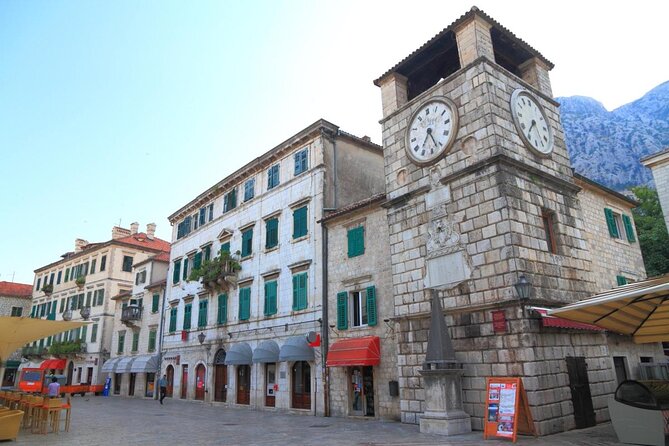
Once inside, the group spends several minutes in the Square of Arms. This is the broadest and most immediately useful place to get oriented. The Clock Tower is the main landmark, and the guide explains its role along with the Pillar of Shame.
The square is also a good place to notice the shape of Kotor’s old city. Public space opens here, while narrow lanes lead toward palaces and churches. You may want to return after the tour for a drink or a closer look at the surrounding buildings.
The short stop has a practical benefit. You get the basic map of the town before entering tighter lanes. The drawback is that five minutes cannot cover every detail, especially if the square is busy.
Beskuca’s Palace and Pima Palace
From the Square of Arms, the route moves to Beskuca’s Palace and then Pima Palace. These stops shift the focus from public monuments to the people who lived behind Kotor’s stone walls.
Pima Palace helps explain household life in earlier centuries. That is valuable because grand churches and defensive walls can make a city’s past feel remote. A guide who connects the palace to family life, status, and daily routines gives you a more human sense of Kotor.
Beskuca’s Palace adds another example of the city’s former merchant and noble homes. The route does not offer an extended architectural lecture, but the guide points out details that are easy to miss when you walk alone.
I especially like this part for first-time visitors who want context rather than a long list of dates. You see how Kotor’s wealth and social structure appeared in its buildings. If architecture is your main interest, though, the brief timing may leave you wanting more.
St. Tryphon Cathedral, Kotor’s essential stop

St. Tryphon Cathedral is the tour’s key religious and architectural sight. It is one of Kotor’s best-known landmarks, and the guide provides a short visit inside. Admission is not included, so check the entrance arrangement and bring a little extra money if you want to enter.
The cathedral also opens the door to Kotor’s religious story. The old town contains several churches tied to different traditions and periods, and the guide places the cathedral in that wider setting. You get more than an exterior photograph. You learn why the building matters to the city.
Expect a concise explanation rather than a full art-history visit. The tour must keep moving, and the cathedral stop is only about five minutes in the planned route. I would treat this as a first look, then return later if the doors are open and you want more time.
The guide’s English is a major part of the experience. Jelena is repeatedly praised for clear, natural conversation and for answering questions without making the history feel like a lecture. Other guides, including Ana Marija and Petra, are also noted for friendly, lively presentations. The exact guide depends on the departure, so do not book on the assumption that one particular person will lead your group.
A few more ways to spend a day around Kotor
- Kotor: Blue Cave Swim Stop, Lady of the Rocks & Submarine Base
★ 5.0 · 1,914 reviews - From Kotor: Boat to Blue Cave & Lady of the Rocks &Submarine Base
★ 5.0 · 1,104 reviews - From Dubrovnik: Montenegro Day Trip with Boat Cruise
★ 4.6 · 884 reviews - Great Montenegro Tour-Lovcen NP,Mausoleum Lovcen,River of Crnojevic,Sveti Stefan
★ 5.0 · 637 reviews
Maritime Museum Square and the Karampana Well
The route continues to Bokelian Navy Square and the Karampana Well. This section brings maritime life into the story. Kotor’s position on the bay made seafaring and trade central to its fortunes, and the square helps connect the town’s inland-looking lanes with its life on the water.
The Maritime Museum is nearby, but admission is not part of the tour. That is useful to know before you arrive. If you want a museum visit, plan it as a separate activity rather than expecting the one-hour walk to include the galleries.
The Karampana Well is a smaller stop, but it adds a nice everyday detail. Public water sources tell you something about how residents managed daily life before modern plumbing. These modest features can be as revealing as grand palaces because they show what ordinary people needed from the city.
The guide will likely keep this stop short. That is sensible for a general introduction, though museum fans may prefer to spend their remaining time inside the Maritime Museum.
St. Luke’s Square and its neighboring churches
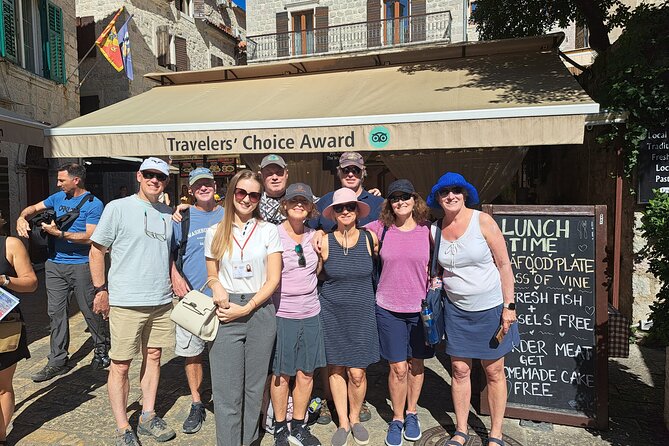
At St. Luke’s Square, the tour reaches the Church of St. Luke and the Church of St. Nikola. Together, they show the close mix of religious buildings within Kotor’s walls.
The churches are not simply a pair of photo stops. They help explain how different religious communities shaped the town and how faith remained part of public life. The guide discusses the churches as part of Kotor’s cultural setting, while the compact route keeps the explanation moving.
Admission to the churches is not included. The itinerary lists the stops, but the tour is not built around lengthy interior visits. If a church is open and you want to look inside, you may need to return on your own, depending on opening conditions and the timing of the group.
This is one reason I see the tour as orientation rather than a complete sightseeing day. It points out the places worth revisiting. You leave with a plan for the next hour or two instead of trying to understand every site on the spot.
Blazena Ozana Church and the Northern Gate

The final section leads to Blazena Ozana Church and then the Northern Gate. The Northern Gate gives you a quick look at the Skurda River, which runs along the edge of the old city.
This ending changes the view from enclosed lanes to the town’s defensive edge. Gates were practical points of control, but they also show how Kotor’s walls worked with the surrounding terrain and water. The river and fortifications helped define the city’s northern boundary.
After the Northern Gate, the group returns to the Square of Arms. That makes the tour easy to use on a busy day. You are not left at an unfamiliar corner of town. You can continue to cafés and shops, walk toward the waterfront, visit a museum, or head back toward the port.
What the $30.25 price gets you

At $30.25 per person, the price is fair if you want a guide to give structure to your first hour in Kotor. The fee covers guiding services, Kotor’s city tax, and a map of the Old Town. It does not cover food, drinks, transport, the Naval Museum, the city walls, or entrance fees for the cathedral and churches.
The value depends on how you use the tour. If you would otherwise wander without context, a good guide can make the same stone streets far more meaningful. The tour also saves planning time. You see the main landmarks in a logical order, then choose what deserves a longer visit.
The price is less appealing if you only want photographs or prefer to read signs at your own pace. You will spend much of the hour listening rather than stopping for long pictures. Still, the compact route and central start make it a reasonable choice for a short stay or cruise call.
The group can hold up to 30 people, but departures may be smaller. One couple once ended up with what felt like a private tour because they were the only participants. That is not guaranteed, and the tour requires at least five people. If the minimum is not met, the operator may offer another date, a similar tour, a private option with a surcharge, or a full refund.
Timing, weather, and practical comfort
The tour lasts about one hour, which is its greatest strength for a tight schedule. Several people describe the timing as just right for a quick introduction, while others wish it lasted longer. Both reactions make sense. Kotor rewards a slow look, but a short guided route leaves room for your own plans.
Late afternoon can be especially appealing. The old town may be crowded when cruise groups are ashore, then calmer after many ships’ passengers return onboard. The departure time varies, so check your booking and choose later in the day when possible if you want a less pressured walk.
The route is classed as easy, but cobblestones are uneven. Wear shoes with steady soles. The tour operates in different weather conditions, so take suitable clothing, but poor weather may lead to cancellation with a choice of another date or a full refund. Service animals are allowed, and most people can participate.
There is no hotel pickup or drop-off. Public transportation is nearby, but the meeting point is within the old town area and the tour itself stays on foot. Food and drinks are also your responsibility, so plan a café stop before or after.
Free cancellation is available up to 24 hours before the local start time. After that point, changes and refunds are generally not accepted. Cruise passengers should be especially careful with ship delays because a missed tour caused by a late or non-arriving ship is not refundable.
Who should book this Kotor walk?
I would choose this tour if you are visiting Kotor for the first time, have only a short window, or want a local guide to explain the city before exploring alone. It suits families as well, since the route is short and one guide described keeping both children and older adults engaged.
It is also a good fit if you care about history, churches, local customs, and the connection between grand buildings and ordinary life. The strongest guides add humor and practical suggestions for food, activities, and further exploration.
I would choose something longer if you want to climb the city walls, spend serious time in the Maritime Museum, study church interiors, or hear a detailed architectural account. Those activities are separate and cost extra.
Should you book the Kotor Old Town Walking Tour?
Book it if you want a clear, lively introduction to Kotor without giving up your whole morning or afternoon. The route covers the essential center, the guides are praised for excellent English and engaging explanations, and the start and finish by the main gate work well for cruise passengers.
Skip it if you dislike group pacing or already know Kotor well. You will move quickly, and some stops are little more than brief explanations from the street. For most first-time visitors, though, $30.25 buys a useful map of the city’s past and a better sense of what to see next.
FAQ
Where does the Kotor Old Town Walking Tour start?
It starts at the Main Info Point of the Tourism Organisation of Kotor, in or near the Square of Arms by the Sea Gate, the main entrance to the Old Town.
Where does the tour end?
The tour ends in the Square of Arms near the main gate of Kotor’s Old Town.
How long does the walking tour last?
It lasts approximately one hour.
Are entrance fees included?
No. Entrance fees for St. Tryphon Cathedral, the churches, the Naval Museum, and the city walls are not included. Food, drinks, and transportation are also excluded.
Is the tour suitable for children?
Yes. A child rate applies when the child shares with one paying adult, and children must be accompanied by an adult.
What happens if the tour is canceled or I need to cancel?
You can cancel up to 24 hours before the local start time for a full refund. If the minimum group size is not met or poor weather causes cancellation, you may be offered another date or experience, or a full refund.
Newest reviews from Kotor
- Cable car + Electric MTB from Njegos Mausoleum to Kotor bay★ 5.0 · 11 reviews
- Private Blue Cave tour with a beach stop – 4h30min duration★ 5.0 · 18 reviews
- Port of Kotor – Kotor-Perast-Our lady of the rocks private tour★ 5.0 · 16 reviews
- Blue Cave Boat Tour from Herceg Novi (1h 45min) (1-6 people)★ 5.0 · 22 reviews
- Ticket Tour: Kotor Bay Cable Car, Budva, Sveti Stefan★ 5.0 · 21 reviews
- Private Your Day, Your Way★ 5.0 · 22 reviews
- Group Perast & Lady of the Rock tour- 1h30min duration★ 4.5 · 19 reviews
- Private tour: Kotor & Budva Riviera- Perast-Our Lady of the Rocks★ 5.0 · 20 reviews
Montenegro Walking Tours, compared.

Kotor Fast-Track: Perast Old Town & Our Lady of the Rocks
Read our review →

Private Kotor Walking Tour – Rick Steves Recommended
Read our review →
Kotor private cooking class with lunch and Old town guided tour
Read our review →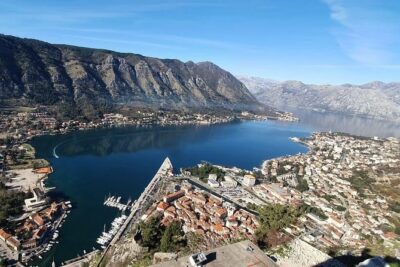
Lady of the Rocks & Perast Old Town Private Tour (up to 5 people)
Read our review →
Food, wine and the best private walking tour of Kotor
Read our review →Browse the lists this tour appears in